
Manipal Academy of Higher Education (MAHE) Dubai Campus has signed a Memorandum of Understanding (MoU) with Fluid Codes, Dubai, an Ansys (part of Synopsys) Elite Channel Partner, to establish the MAHE Dubai x Fluid Codes Centre of Excellence for Engineering Design & Simulation. Ansys (part of Synopsys) is among the world’s leading engineering simulation software providers, enabling organisations across industries including aerospace, automotive, energy, electronics, healthcare and manufacturing to model, test and optimise products and systems before physical deployment.
The collaboration marks a significant step towards strengthening simulation-led engineering education in the UAE and advancing the integration of industry-grade engineering technologies into academic learning. The Centre of Excellence (CoE) is designed to support teaching, research, innovation, professional training and industry collaboration through advanced computational tools and applied learning experiences.
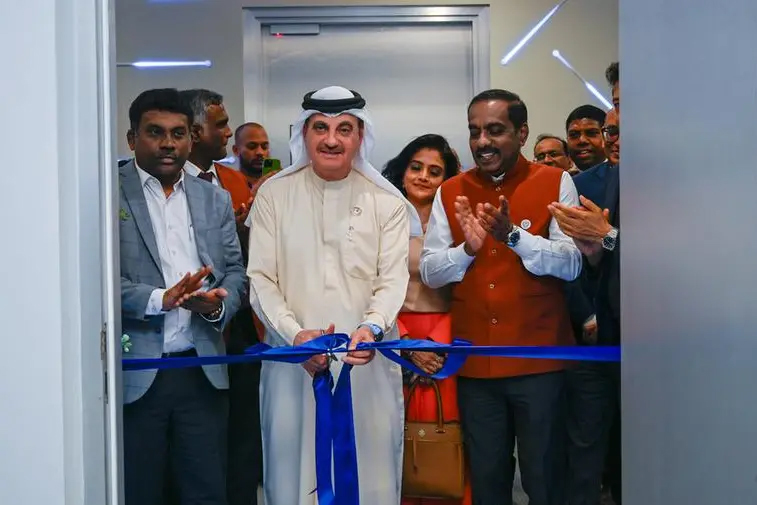
The Centre of Excellence was formally inaugurated by H.E. Yaqoob Al Ali, Executive Director & Private Advisor, Office of His Highness Sheikh Juma Bin Maktoum Al Maktoum, in the presence of senior leadership from MAHE Dubai, Fluid Codes, industry representatives, faculty members, and students. The launch was also attended by several distinguished industry and sustainability leaders, including Eng. Azmi S. Aboul-Hoda, CEO & Managing Director of EMergy; Dr. Paul Prabahar, President of TEPA UAE; and Amb. H.E. Dr. Srividhya Sukumar, ESG Advocate and Global Ambassador to the United Nations, whose presence underscored the significance of the initiative.
The CoE will operate across four core pillars: teaching and curriculum integration, research and innovation, industry collaboration and professional training, and institutional branding and outreach. Planned initiatives include simulation-based coursework, capstone design integration, faculty-led research using advanced computational tools, collaborative R&D with UAE engineering firms, professional training programmes, industry certification pathways, workshops, competitions and regional technical events.
Speaking on the significance of the collaboration, Dr. S. Sudhindra, Pro Vice Chancellor, MAHE Dubai, said, “Universities have a responsibility to anticipate the capabilities that future industries will require, rather than simply respond to changes in the market. Engineering is increasingly being shaped by digital design, simulation, advanced manufacturing and data-driven innovation, making exposure to these technologies essential rather than optional. Through this collaboration with Fluid Codes, we are creating an ecosystem where learning, research and industry engagement come together, enabling our students to develop the technical depth, problem-solving ability and industry readiness needed to contribute to the UAE’s long-term economic and technological ambitions.”
Against this backdrop, the Centre of Excellence will help MAHE Dubai equip engineering students with the ability to model, simulate, validate and optimise solutions before they move into physical prototyping or deployment. It will support learning and research across areas including computational fluid dynamics, structural analysis, electronics, electromagnetics, thermal systems and multiphysics modelling.
The collaboration will provide MAHE Dubai students and faculty with access to industry-standard simulation technologies, creating one of the region’s most comprehensive academic simulation environments.
Discussing the academic impact of the initiative, Dr. Rajiv Selvam, Associate Dean – School of Engineering & IT, MAHE Dubai, said: “Engineering is increasingly becoming a simulation-first discipline, where ideas are tested, refined and optimised in virtual environments before they are implemented in the real world. Through this Centre of Excellence, we are embedding that mindset into the learning experience by giving students and faculty access to industry-standard simulation tools, certification pathways and applied research opportunities. Beyond strengthening technical capabilities, the initiative will enable closer collaboration with industry, support innovation-led projects and equip graduates with the skills required to contribute effectively in highly specialised engineering environments.”
The announcement comes at a time when the UAE is accelerating its focus on advanced industry, local manufacturing, research and future-ready technical talent. Under Operation 300bn, the country aims to increase the manufacturing sector’s contribution to the national economy from AED 133 billion to AED 300 billion by 2031, while raising industrial R&D investment from AED 21 billion to AED 57 billion. Globally, workforce requirements are also shifting rapidly, with the World Economic Forum’s Future of Jobs Report 2025 estimating that 22% of today’s jobs will be affected by structural labour-market transformation by 2030, and that 39% of workers’ existing skill sets could be transformed or become outdated over the same period.
Highlighting the industry relevance of the initiative, Mr. Ajay Parihar, CEO, Fluid Codes, said, “Engineering organisations today rely heavily on simulation to accelerate innovation, reduce development cycles and improve product performance long before physical prototypes are built. As industries across the UAE continue to invest in advanced manufacturing, aerospace, clean energy and emerging technologies, simulation expertise is becoming a critical engineering capability and workforce requirement. Through this Centre of Excellence, we are enabling students and faculty to work with the same technologies used across industry, helping bridge the gap between academic learning and real-world engineering practice.”
Fluid Codes will also deliver structured workshops using Ansys CFD, Ansys Mechanical for structural simulation, and Ansys Electronics Desktop, including HFSS and Maxwell. The collaboration further includes faculty enablement sessions, technical workshops on simulation best practices and emerging technologies, certificates of completion for workshops, participation acknowledgements, and joint collaboration opportunities with UAE engineering firms.
The Centre of Excellence will be supported by MAHE Dubai’s high-performance computing capacity and dedicated simulation laboratory infrastructure. It will enable simulation modules to be embedded across Mechanical, Civil, Electrical and Mechatronics engineering programmes, while also supporting capstone design projects, faculty research, industry problem statements and student certification pathways.
By integrating advanced simulation technologies into teaching, research and industry engagement, MAHE Dubai aims to strengthen graduate employability, accelerate research outcomes and contribute to the development of engineering talent equipped to thrive in an increasingly digital and innovation-driven economy.