
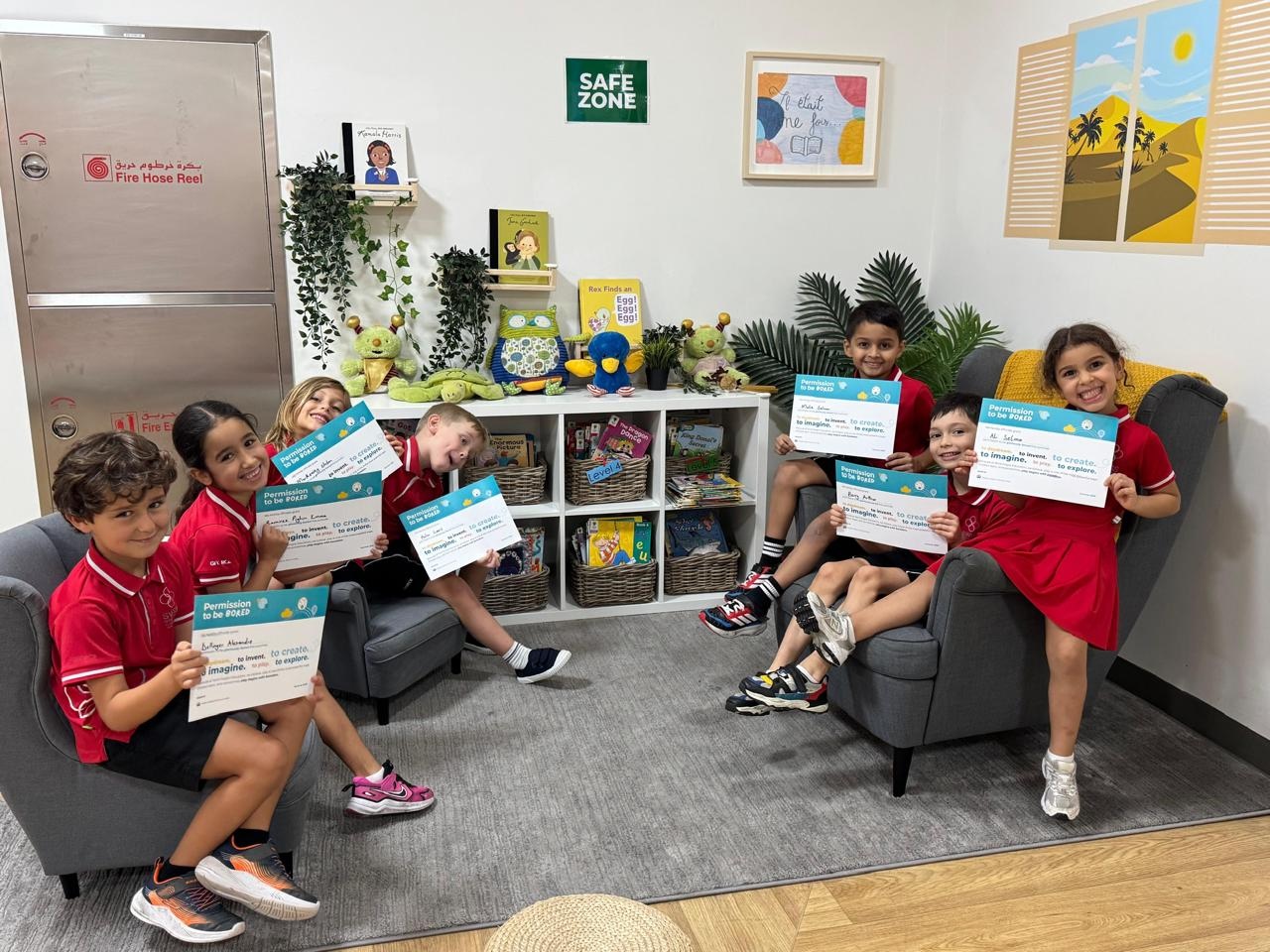
Every summer holiday begins with the same familiar phrase: “I’m bored.” For many families, it signals the start of a search for activities, screens, or entertainment to fill the time.
But what if boredom isn’t something to solve?
Following its Permission to Play campaign, which encouraged parents to rediscover the value of play through the eyes of their children, Nord Anglia Education is extending the conversation into the summer months with a new campaign: Permission to Be Bored.
The campaign encourages families to see boredom differently: not as a problem to fix, but as the moment that often comes before imagination, creativity, and discovery. Whether it’s inventing a new game, building a den, telling a story, or creating a new family tradition, the campaign reminds parents that some of childhood’s most meaningful moments begin when children are given the time and space to simply be bored.
On the final day of term, every child was given a Permission to Be Bored certificate to take home, offering parents playful prompts that encourage curiosity rather than immediately filling every quiet moment.
Families were invited to share what boredom inspires throughout the summer using the hashtag #PermissionToBeBored, with selected stories and creations showcased across Nord Anglia Education’s schools and social channels.
Elizabeth Lamb, Regional Managing Director – Middle East, Nord Anglia Education, said: “As parents, our instinct is often to fill every quiet moment. But boredom doesn’t have to be something we rush to fix. It can be the starting point for curiosity, creativity and imagination. Permission to Be Bored is about giving children the time and space to discover their own ideas, create their own games and make memories that don’t need to be planned or scheduled. It’s a simple reminder that some of childhood’s most valuable moments happen when we step back rather than step in.”
Permission to Be Bored builds on the insight behind Permission to Play and reinforces Nord Anglia Education’s belief that play is fundamental to children’s learning and development. By encouraging families to embrace unstructured time, the campaign highlights how creativity, confidence, resilience and problem-solving often emerge when children are given the freedom to follow their own curiosity.